

Structured Cabling Components
There are six different kinds of subsystems that go into structured cabling, i.e Entrance facilities, Equipment rooms, Backbone cabling, Horizontal cabling, Telecommunication room and Work area components.
Patch panels, network switches and trunks are three big components of any structured cabling system. Besides cables, structured cabling solutions consist of racks, network cabinets, hardware ports and more to work together as part of the overall system.
Fiber Optic Trunk Cables
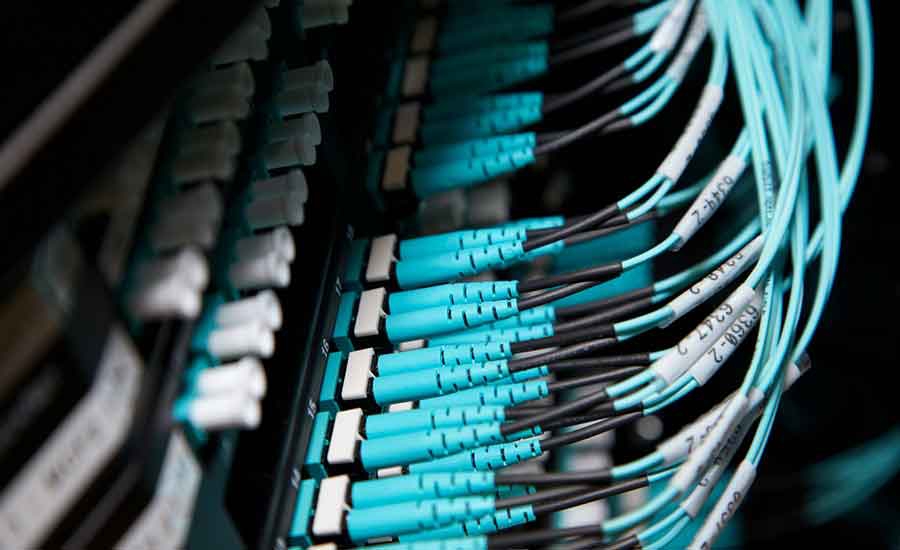
A trunk is a cable that connects to patch panels. Trunk is a way of consolidating the number of wires running from patch panel to patch panel. They are a grouping of wires that are bound into one big cable to keep everything neat and organized.
Patch Panels
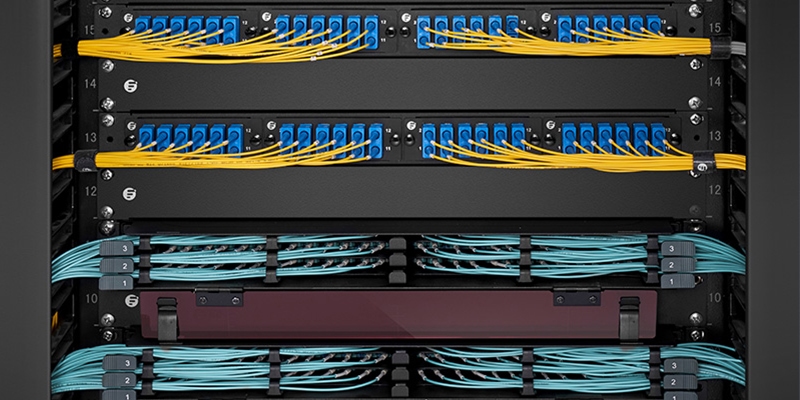
Cables connected to a patch panel, attached to a network rack. Patch panels use cords to connect to a switch. The organized cabling provides aesthetic appeal and simplified cable management.
Switches
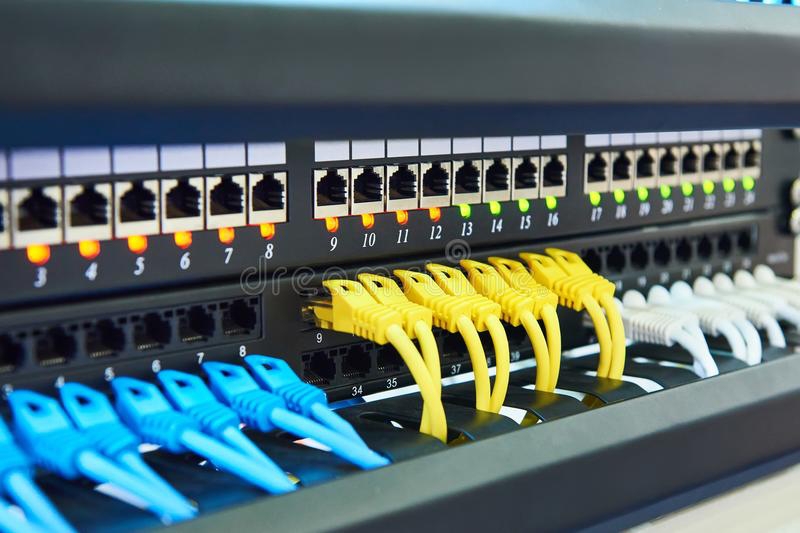
Cables running to a network switch. Switches facilitate receiving, processing and sending data (sharing resources) by connecting all the devices to a network. Cables should be labeled for easy identification.